All the resources you need, all in one place
Frequently Asked Questions • Tips for Touring Apartments • Move in Day Checklist • Complimentary Concierge
Frequently Asked Questions
Qualifying Criteria
How much can I afford in rent?
Most apartments will require you make 3x the base rent. This is based on your gross (pre-taxed) income. Keep in mind most apartments will also have monthly fees in addition to rent. (This might include things like pest control, valet trash, an amenity fee, etc.)
What if I don’t have rental history?
That’s okay! The application will most likely ask for your last address, and you can put your parents house or wherever you’re currently living, even if you’re not paying rent.
What if I have bad credit or no credit?
I always recommend downloading the Credit Karma app to double check; a lot of people have credit and don’t even realize it.
Apartments will still approve you with no credit; there’s always a small chance they may require a higher deposit so be sure to double check the fine print with the leasing agent.
Most apartments want to see a credit score of over 550 to be approved without a higher deposit. If your credit score is under 550, you run the chance of a denial or a higher deposit upfront, up to 1 months rent.
What would lead to a denial on an application?
Things that would lead to an application denial would be a bankruptcy within the last 10 years, felonies, violent misdemeanors. evictions, unpaid property debt, unpaid utility debt, or car-repos.
Market Advice
When should I start looking for an apartment?
Generally, apartments work on 60 day availability notices. This means that most of the availability you’ll find online when apartment shopping will only go out as far as 60 days from the day you’re looking.
I personally recommend “window shopping” about 75-90 days in advance if you’re a planner like myself, and want to at least get a better idea of the buildings you might like. Then, once you’re 60 days out from your desired move in date, is when you’ll find exact pricing and availability for your time frame.
Keep in mind that some apartments may offer time sensitive specials, such as 1 month free if you move in by the end of the current month. This means you could potentially find better deals if you wait close to your move in date, but this can always be a bit of a gamble.
When is the best time of year to move?
Historically, prices fluctuate seasonally. Summer months are usually when prices are at their highest, and winter months are usually when rent prices are at their lowest.
From what I’ve seen, the most affordable months to move are usually November through February.
Do prices change daily? If so, why?
A lot of times when you’re apartment shopping, you may notice that from the time you’re shopping online to the time you’re actually touring, that the rent price may have changed.
The big reason prices can, and usually do change daily is based on the automized system that apartment complexes use that determines the supply and demand, and adjusts the price accordingly. They determine this based on what they have available, and how many applications they’ve received over the past few days or week.
Which lease term should I choose?
You may notice that prices change based on which lease term you choose. This is because apartment complexes try to spread out move outs, so they’ll try to incentivize you with a specific lease term by offering a lower price. I’d either choose the lowest price lease term, or choose a lease term that ends during the winter months when prices are at their lowest.
Why do prices increase the further I push out the move-in date?
A common occurrence you might see is that sometimes prices increase the further you push out the move in date from the day the unit becomes available. This is because apartments want to incentivize you to move in as soon as possible, so they’re not eating the cost of a vacant apartment sitting on the market.
What form of proof of income do they require?
This will vary from property to property, but generally speaking these are the commons acceptable forms of proof of income:
- Previous years tax returns
- 2-6 months of paystubs
- 2-6 months of bank statements (this is what I’d recommend for anyone who is self employed)
General
What’s included in the rent price?
The rent you see specifically reflects the base rent price. You will also pay for monthly fees which vary from property to property, but usually include things such as valet trash and pest control.
In addition to the monthly fees, you will also be responsible for paying for electricity through the city of Austin, internet through your preferred provider, and water which will be payed through your apartments residential portal.
What does the application process look like?
Apartment applications are all done online. They will ask for proof of income, run a credit check, do a background check, ask for rental history, and ask for contact information. The typical response time on this is anywhere from 24 hours, to about 7 business days.
When should I start touring?
Generally, I recommend touring closer to when you’re ready to apply for a place. A lot of apartments will offer “look and lease” incentives which will allow you get rent specials if you apply within 24-48 hours of touring their property.
What happens if I break my lease early?
Breaking a lease early typically comes with consequences, such as paying a penalty fee or being responsible for rent until a new tenant is found. Review the lease agreement for the terms and conditions regarding lease termination and discuss potential scenarios with the landlord.
What’s the difference between Allocated vs. Sub-metered water?
When an apartment complex tells you that your water is “sub-metered”, that means you will be billed based on your individual usage. Allocated means that the total water bill for each building will be added up, and evenly divided amongst tenants.
Sub-metered is usually preferred, and is very common for newer buildings.
How do I apply for an apartment?
Everything will be done online. Simply go to the apartment complex’s website, select the floor plan you want, select the unit you want, and then click apply now. You will then be prompted to create a resident profile, and then will begin the application from there.
The entire application process usually can take anywhere from 15-20 minutes. You will need to have a valid form of ID, proof of income, and then they will run a credit and background check. Properties will typically approve you within 1-7 business day!
How should I prepare for an apartment tour?
Definitely check out my Tour Day Handbook for more information on this topic.
Things you’ll need for your tour:
- Valid form of ID (can be a passport, drivers license, military ID, etc. Make sure it is not expired (they will sometimes turn you away).
I also recommend bringing a water, snacks, and comfortable walking shoes if you’re going to be out and about all day. Make sure to also take pictures and videos while you’re out, and ask for a copy of the monthly fee sheet and site map before you go.
Are apartments pet friendly?
Yes! Every single apartment I have toured in the last 5 years has been pet friendly. Keep in mind that the majority of these properties will have breed restrictions, and a max limit of two pets per household, unless they are a service animal or ESA, in which case they don’t count.
Restricted breeds:
German Shepards
Pitbulls
Mastiffs
Wold Hybrids
Boxers
Huskies
Chow Chow
Doberman
The list above is a GENERAL list of the most common restricted breeds, but these do vary property to property. Definitely reach out to the property for the specifics on this!
Some property management companies will NOT have breed restrictions. If you do have a fur baby that’s on the restricted breed list, definitely check out RPM living. All of their apartment communities are pet friendly with no breed restrictions.
Is renters insurance required?
Yes, all apartments will require renter’s insurance! This is usually fairly cheap, and is very easy to set up. I used Lemonade and paid around $10/mo.
Not sure where to start? Opt into our free concierge service when you apply for one of my listings and put me down as the referral. Our concierge team will let you know what renters insurance packages are available for you.
The 411 on Touring apartments
Touring apartments can be either fun or stressful, depending on how prepared you are. After 5+ years of touring with clients, these are my best tips, tricks, and questions for leasing agents that will help you have a successful tour day!
Tips & Tricks
I always recommend trying to squeeze all of your tours in 1-2 days, rather than spreading them out. Some apartments will offer “look and lease” specials, which is a special given if you apply within 24-48 hours of touring. If you spread tours out over a week, you might miss your chance at qualifying for these kinds of deals.
When you’re browsing for apartments online, if you see an apartment that has a really great price but you’re not able to tour for another day or two, call the property and have them email you a quote. This will lock that price in for 48 hours. This way, you can hold out the price you’re seeing online until you’re able to go view the apartment in person. (Note: Not every apartment complex offers quotes, however in my experience the good majority of them do)
Please be mindful that *most of the time*, you won’t be able to tour the exact unit you’d be living in, especially if you’re looking 1 – 2 months in advance. If this is the case, ask the leasing agent to show you the same floor plan, or a similar one so you can get a better idea.
When touring, pay attention to noise level inside the apartment itself, and also check for water pressure and cell service. It’s also good to be mindful of the upkeep of the building, including hallways, amenity spaces, and the exterior.
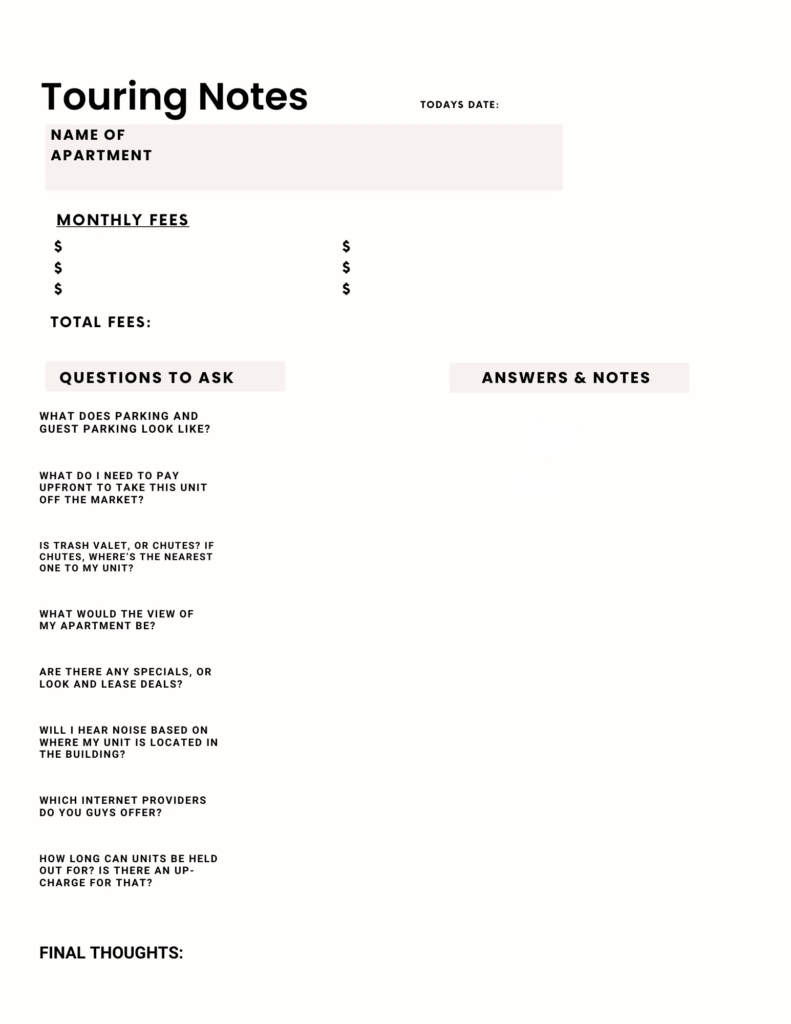
Touring notes on the go
Never forget what questions to ask again! Just click on the the Touring Notes and it will download an editable file, so you can have it on the go
Complimentary Concierge
When you lease one of my listings, you gain access to our complimentary concierge service, designed to make your move-in process as smooth as possible. Our dedicated concierge team is here to assist you with a range of move-in tasks, including setting up utilities and providing recommendations for local services. Whether you need help transferring your internet service, setting up electricity and water, or finding reliable moving companies, our concierge service is committed to ensuring that your transition to your new home is effortless and stress-free. Enjoy the convenience and peace of mind that comes with having a professional team dedicated to handling the details, so you can focus on settling into your new space.




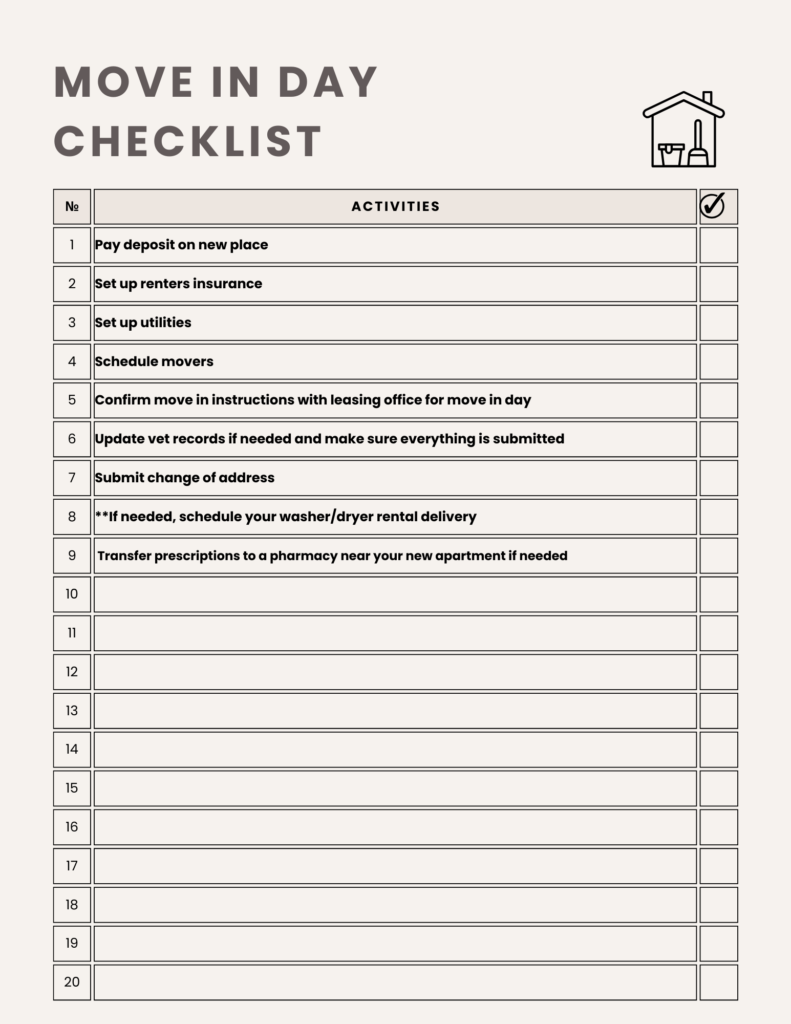
Move in Day Checklist
Advice For planning your move
Start Early
Begin planning and organizing your move as soon as possible. This will give you more time to pack, arrange for movers, and take care of any other logistical details.
Declutter
Before you start packing, go through your belongings and declutter. Donate or sell items you no longer need or use. This will not only reduce the amount of stuff you have to move but also make unpacking at your new home easier.
Create a Packing Plan
Develop a packing plan to help you stay organized. Start by packing non-essential items first and gradually work your way toward packing essential items closer to your moving date.
Gather Packing Supplies
Make sure you have all the necessary packing supplies, such as boxes, tape, bubble wrap, and packing paper. You can often find these items for free or at a discounted price from local stores or online classifieds.
Label Boxes
Clearly label each box with its contents and the room it belongs to. This will make it easier to unpack and find items once you’re in your new home.
Pack Essentials Seperately
Pack a separate box or suitcase with essential items you’ll need immediately upon arrival at your new home, such as toiletries, medications, a change of clothes, and important documents.
Arrange for Movers
If you’re hiring professional movers, book them well in advance to secure your preferred moving date. Be sure to get estimates from multiple moving companies and read reviews to ensure you’re choosing a reputable company.
Notify Utilities & Services
Remember to notify utility companies, as well as other services like internet and cable providers, of your move. Arrange for services to be disconnected at your old address and connected at your new one.
Change your address
Update your address with the post office, as well as with any relevant institutions or organizations, such as banks, insurance companies, and subscriptions services.
Take Care of Pets & Plants
If you have pets or plants, make arrangements for their care during the move. Consider boarding pets or asking a friend or family member to look after them, and take special care when transporting plants to ensure they arrive safely.
Inspect Your New Place
Before moving in, do a walkthrough of your new home to check for any damage or issues. Take photos for reference and notify your landlord or real estate agent of any concerns.
Stay Flexible & Stay Positive
careful planning, unexpected challenges may arise during the moving process. Stay flexible and adaptable, and try to maintain a positive attitude. Remember, moving can be stressful, but it’s also an exciting opportunity for a fresh in start in a new space.